

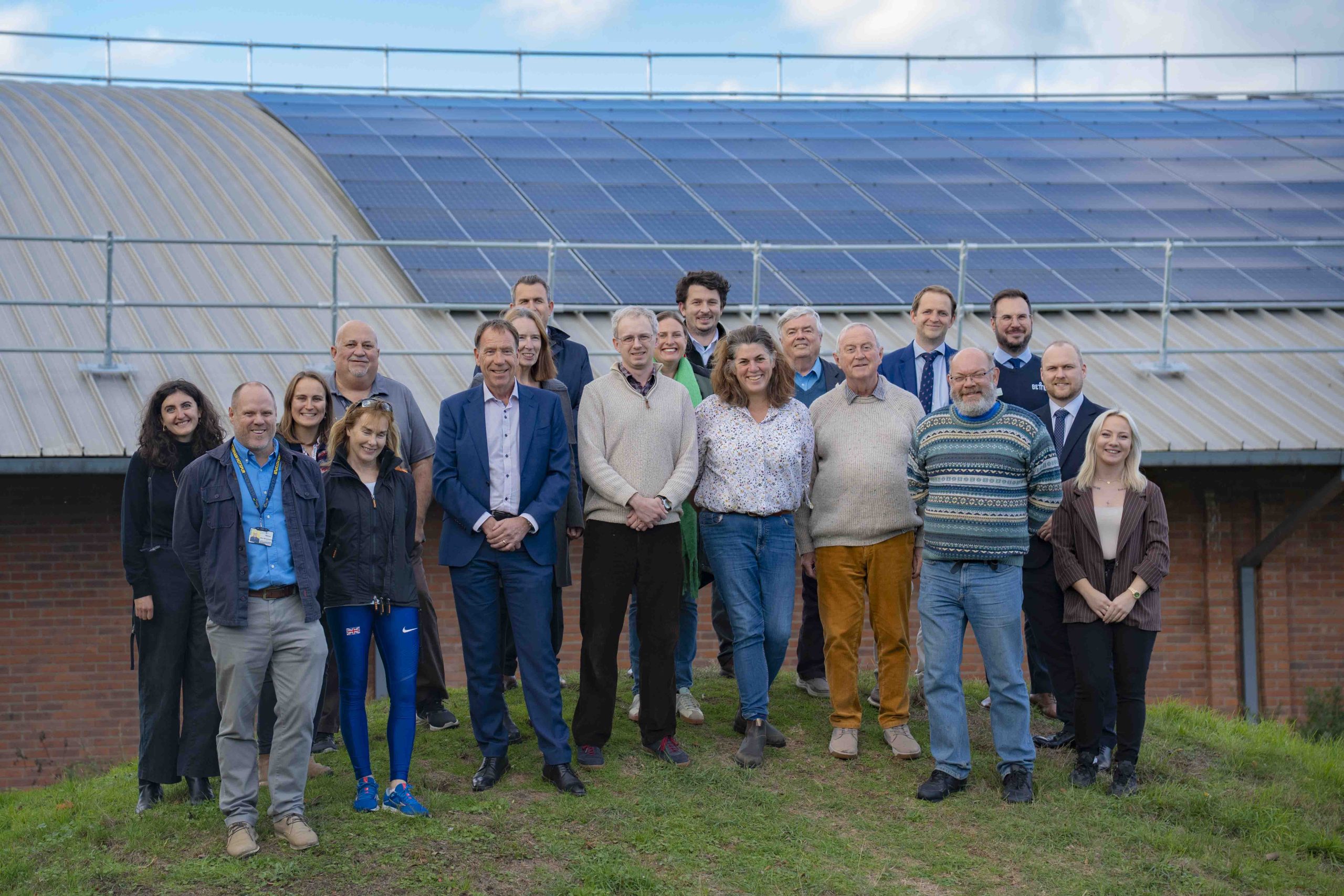
Leisure Centre helps council achieve major milestone
Published 23 October 2026
Vale of White Horse District Council is celebrating the completion of a landmark decarbonisation project at its leisure centre in Abingdon, marking a major step forward in its ambition towards becoming a net zero council by 2030.
The project, which began construction at White Horse Leisure and Tennis Centre in February last year, has transformed the way the site is run. The old gas boilers and combined heat and power system have been removed and replaced with modern air source heat pumps, with 600 solar panels installed on the centre’s roof to generate electricity.
Since the solar panels were connected in December 2025, they have produced more than 175,000 kWh of electricity (enough to power around 70 average homes for a year*).
As a result of the work, the leisure centre will no longer rely on fossil fuel for its heating or lighting, significantly reducing carbon emissions while creating a more sustainable and resilient facility for residents.
The work forms part of the council’s wider programme to decarbonise its buildings and reduce emissions from its own operations.
The new energy-efficient measures were made possible through funding from the government’s Public Sector Decarbonisation Scheme (PSDS), run by the Department for Energy Security and Net Zero and delivered by Salix. Vale of White Horse District Council secured almost £6 million through the scheme to upgrade heating systems at both White Horse Leisure and Tennis Centre in Abingdon and Wantage Leisure Centre.
Additional funding was provided through the council’s Community Infrastructure Levy (CIL) programme, which uses contributions from new developments to support local infrastructure projects, as well as the UK Shared Prosperity Fund.
Now work at both leisure centres has been completed (work at Wantage finished this summer), the council estimates its overall carbon emissions will reduce by approximately 25 per cent, helping it towards its target of becoming net zero in its own operations by 2030.
Councillor Andrew Crawford, Cabinet Member for Property, Housing and Economic Development at Vale of White Horse District Council, said: “In addition to hugely reducing carbon emissions, the use of renewable energy at the leisure centres will make them cheaper to run and less vulnerable to sudden rises in energy costs, making them much more economically viable in the long term.”
Councillor Dr Robert Clegg Cabinet Member for Environmental Services, Climate Action and Nature Recovery said: “The completion of this project is a significant milestone in our efforts to tackle climate change. By replacing fossil fuel heating with modern renewable technology, White Horse Leisure and Tennis Centre is now future-proofed for years to come.
“The work at our leisure centres in Abingdon and Wantage will cut our carbon emissions by more than a quarter, building on the successful decarbonisation work already completed at Faringdon Leisure Centre.”
Ian Rodger, Director of Public Sector Decarbonisation at Salix, said: “Decarbonising leisure centres is about far more than reducing carbon emissions. White Horse Leisure and Tennis Centre in Abingdon and Wantage Leisure Centre sit at the heart of the local communities that they serve, and this work will help create healthier, more sustainable spaces where people can be active and connect with others.
“By reducing energy use and emissions, they can enjoy lower operating costs while continuing to deliver the social, health and wellbeing benefits that leisure centres provide every day. Decarbonisation is an investment in people, communities and the long-term future.”
Notes to editors
*Average home electricity usage figures from Ovo Energy
The project was delivered by Ashe Construction Ltd, supported by consultants Pellings LLP.
About Salix:
About Salix. Salix is a trusted delivery partner to the UK, Scottish and Welsh governments, regional combined authorities and public sector organisations across the country. The schemes are dedicated to reducing carbon emissions and supporting the government’s ambitious net zero targets. Since its formation in 2004, Salix has helped organisations commit to more than 22,000 projects by administering £3.7 billion of funding, with projects saving 1.2 million tonnes of carbon dioxide annually.


